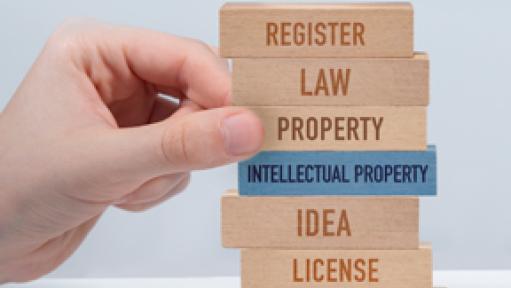
Intellectual property (IP) refers to creations of the mind like inventions, art, and literature that can be legally protected. If you have come up with something unique and original, you might have IP. Generally, an intellectual property right belongs the author of an intellectual creation.
To obtain protection, it is necessary for your idea to be externally expressed. For example, if you want to patent a machine, you need to provide a patent specification including the description of your invention.
Do I have IP?
Take the following steps to help you find out:
Identify your creation: Determine if your idea falls under one of the categories of intellectual property, such as patents, trademarks, copyrights, or trade secrets.
Evaluate originality and novelty: Make sure your idea is unique and hasn't been publicly disclosed or copied elsewhere.
Consult with a professional: Seek legal advice from an IP attorney or expert to understand the potential of your idea and the best way to protect it.
Search: Conduct thorough research or hire a professional to check if a similar intellectual property exists. This is crucial for patents and trademarks.
Prepare necessary documentation: If your creation qualifies, prepare and file the applications needed for legal protection.
Which IP rights are there?
Different types of IP can be protected by different IP rights. Some intellectual creations can be protected by more than one IP right.
Most IP rights, such as trademarks and designs, need to be registered with an IP office, while patents are granted following a thorough examination. However, some IP rights arise automatically in the moment that the idea is externally expressed (this is, for example, the case with copyright in many countries). Remember that IP rights are territorially limited, which means that the owner obtains protection in a country or region in which a given IP right has been registered, or that has been granted by other means.
Protects literary, artistic and scientific works. The protection extends only to expressions, and not to ideas, procedures, methods of operation or mathematical concepts as such;
What can I protect? Examples include: books, articles, paintings, photos, sculptures, movies, theatre plays, architectural works, original social media content, research papers, theses and dissertations, computer software.
Protects signs, symbols and expressions capable of distinguishing products and services from those of other entities;
What can I protect? Examples include names, the name of a company, brand, the name of a product or a service, a logo, or even a shape, pattern, sound or colour.
Protects the appearance of a product or a part of a product; such as lines, contours, colours, shape, texture, materials, movement, transition or animation; Design protectable products may be physical or non-physical.
What can I protect? Examples include the packaging of a product, spatial arrangements of items, designs including furniture, home appliances, cars or clothing, computer icons, graphic designs, logos, surface patterns, typographic typefaces and graphical user interfaces.
Protects inventions which bring a new technical solution to the market or a new way of doing something;
What can I protect? Examples include machines and mechanical devices, compositions and formulas such as pharmaceutical drugs, industrial processes, computer hardware.
Protects the names of products that originate from specific regions and have particular qualities or enjoy a reputation linked to their production territory, where at least one of the production steps (PGI) or all the production stages (PDO) take place in the defined area;
What can I protect? Examples include names of food and agricultural products (cheeses, fruit, vegetables, meat products, pastry, etc.), and names designating wines or spirit drinks.
Other IP rights such as utility models, trade secrets and plant varieties also exist. The above are just some of the most common IP rights available.
Take control of your success, register your IP today!
Unleashing the full potential of your intellectual property starts with registration. It’s more than just a formality; it’s an investment in your future. Register your IP today and start reaping the benefits tomorrow.
Make your creations stand out, protect them, and power your success!
Latest From This Section